
Minimalist Organization Strategies for a Calm Productive Space

In an increasingly chaotic world, the pursuit of minimalism has become more than just a lifestyle choice; it is a necessity for cultivating balance. Minimalist organization strategies focus on reducing clutter and distractions, creating environments that enhance focus and well-being. By streamlining our spaces, we can foster not only productivity but also a sense of peace.
As personal organization trends evolve, embracing minimalism can lead to profound changes in how we interact with our surroundings. Consider the following benefits:
- Enhanced Focus: Fewer distractions lead to improved concentration.
- Reduced Stress: A tidy environment decreases anxiety levels.
- Increased Productivity: A clear space often means a clear mind.
This article will explore the Top 5 strategies that can help you implement minimalist organization in your life. These practical tips will serve as a guide for transforming your space into a calming and productive haven.
Top 5 Minimalist Personal Organization Strategies for a Calm and Productive Environment
In our fast-paced world, filled with constant demands on our time and attention, creating a calm and productive environment is essential for enhancing mental clarity and efficiency. While many are drawn to the bright and polished aesthetic often associated with minimalism, its true power lies in its ability to help simplify life and focus on what truly matters. This article is dedicated to unearthing the top five strategies to attain minimalism in personal organization, arranged in a countdown from the fifth to the first. These strategies are designed to foster a space that amplifies peace and productivity.
5. Declutter Regularly
The initial step in any journey towards minimalism involves the regular practice of decluttering. This is not a once-and-done task but a habitual process to navigate our material possessions. Regularly assessing personal possessions—perhaps on a quarterly or biannual basis—allows individuals to evaluate what adds value to their life. By categorizing items into groups: keep, donate, and discard, the essence of decluttering is captured. This systematic approach helps maintain an uncluttered environment—which in turn reduces stress and enhances focus.
- Start small: Target one area or room at a time to prevent feeling overwhelmed.
- Set a timer: Compartmentalize decluttering sessions into manageable time slots.
- Use the “one in, one out” rule: For every new item you acquire, consider letting go of another to maintain balance.
For example, begin with your wardrobe by examining pieces infrequently worn and questioning their necessity. The act of letting go can be liberating, as it strips away unnecessary clutter, making physical and mental space for significance. Books, technology items, and kitchen utensils often also benefit from this frequent scrutiny.
4. Optimize Workspaces
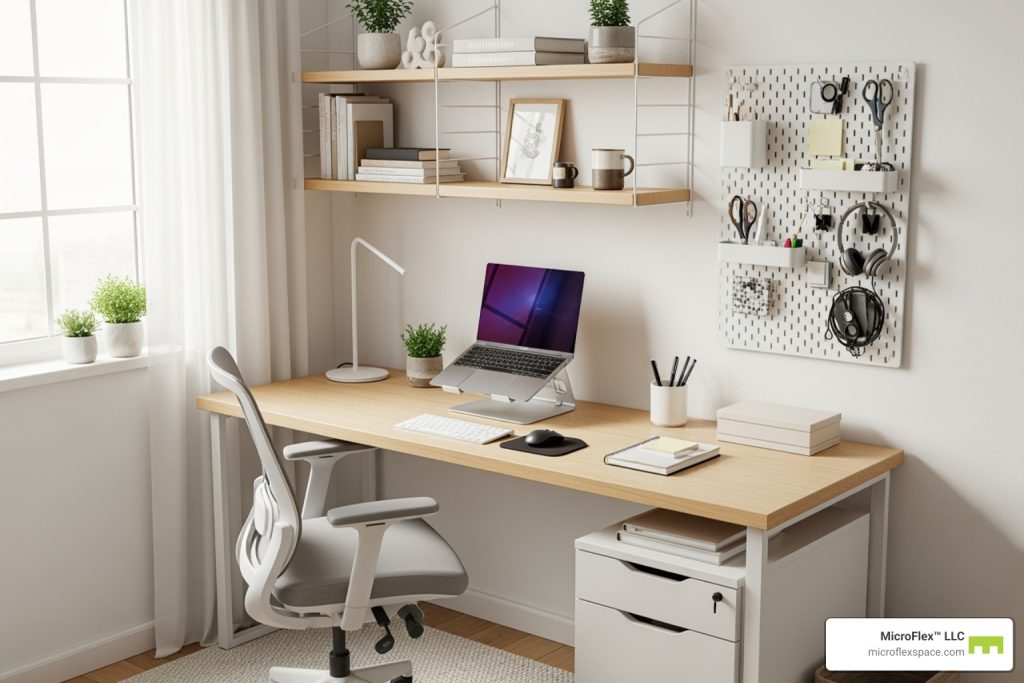
A workspace, whether a home office or a desk at work, profoundly impacts productivity and creativity. A minimalistic workspace embodies simplicity to eliminate distractions. It starts with a thorough desk organization—removing items that do not contribute to your work process and retaining only essentials. Incorporate storage solutions that are not only functional but also comforting to look at, such as aesthetically pleasing baskets or sleek filing systems. Ergonomics should never be overlooked, as comfortable seating and suitable desk height significantly contribute to maintaining focus during long work hours.
An example of an optimized workspace in action might include a setup where cords are hidden, papers are organized neatly in trays, and personal yet purposeful items like a single frame or a small plant provide a touch of tranquility. Aim for clean, organized, and purposeful spaces free of visual noise.
3. Create a Daily Routine
Establishing a daily routine is a fundamental step in embracing minimalism. A well-considered routine helps prioritize tasks efficiently, aiding in the reduction of decision fatigue. This structure ensures that each day carries clear objectives and balanced intervals dedicated to various tasks, consequently leading to higher productivity. Consider employing digital tools or traditional planners to maintain order within your routines, ensuring technology does not become a distraction.
- Identify your ‘power hours,’ or times when you are at your most productive, and align challenging tasks with these periods.
- Incorporate regular breaks to rejuvenate your mind and avoid burnout. Activities such as brief walks or simple stretches can be rejuvenating.
- Implement the Pomodoro Technique by working for 25 minutes and then taking a 5-minute break. This method enhances concentration while preventing fatigue.
For example, a morning routine might start with exercise, followed by a hearty breakfast, time for creative or focused work, midday rest, and administrative tasks post-lunch. Such structuring not only maximizes productivity but also minimizes stress, ultimately nurturing a minimalist lifestyle.
2. Implement a Minimalistic Aesthetic
A pivotal element in minimalist environments is adopting a minimalistic aesthetic. The visual dimension heavily influences mood and productivity. Embrace subtle, neutral color palettes complemented by minimal accent colors to avert overstimulation. Focus on furniture with clean lines and consider multifunctional pieces that utilize space adeptly. This approach not only organizes your surroundings but also improves their appeal, making areas appear more welcoming and conducive to mental peace.
Introduce elements like indoor plants and maximize natural light for an uplifting atmosphere. Not only are plants aesthetically pleasing, but they also purify the air, contributing to overall well-being. An example might include a simple white office desk complemented by a birch wood chair, soft grey curtains, and succulents on the windowsill.
1. Practice Mindful Consumption
At the pinnacle of minimalist strategies is the principle of mindful consumption; being systematic and intentional about the items we introduce into our lives. The idea here is to consciously consider whether a potential purchase genuinely enhances your life or merely adds clutter. Always weigh if an item’s presence contributes value when contemplating a new acquisition.
This practice extends beyond material possessions to experiences. Investing in quality experiences over accumulating stuff often leads to more enduring satisfaction and reduces stress. For instance, spending money on a memorable trip or a class to learn a new skill can be far more fulfilling than purchasing non-essential apparel.
Applying these five minimalist personal organization strategies allows you to craft an environment that nurtures tranquility and productivity. Each step encourages a lifestyle where your environment mirrors your values and priorities, creating a harmonious balance that supports a content and focused life. As you embark on the minimalist path, you’ll discover newfound clarity, freedom, and joy in simplicity.
| Category | Details |
|---|---|
| Clutter Reduction | By minimizing physical and digital clutter, individuals can clear mental space, enhancing focus and productivity. |
| Time Management | Effective scheduling and prioritization of tasks contribute significantly to efficiency, allowing for a peaceful workflow. |
| Mindfulness Practice | Incorporating mindfulness techniques can boost concentration, leading to a more serene work atmosphere. |
| Digital Detox | Periodic breaks from technology can reduce distractions, fostering an environment conducive to productivity. |
Frequently Asked Questions about Minimalist Personal Organization Strategies
What are the core principles of minimalist personal organization?
The core principles of minimalist personal organization involve simplifying your surroundings and your schedule to focus on what truly matters. This means evaluating the necessity of each item or activity in your life and eliminating those that do not serve a clear purpose. By paring down to the essentials, you create space and time for what is most important, fostering a calmer and more productive environment.
How can minimalism enhance productivity and calmness in my environment?
Minimalism enhances productivity by reducing distractions and clutter, allowing you to concentrate better on tasks at hand. By having fewer items in your workspace, it’s easier to find what you need without wasting time. Minimalism also promotes mental clarity and reduces stress, as a tidy space often leads to a more organized mind, enabling a calmer approach to work and personal tasks.
Is it possible to maintain a minimalist lifestyle in a busy household?
Yes, it is feasible to maintain a minimalist lifestyle even in a busy household. The key is to communicate and involve all household members in the process. Set clear guidelines and prioritize communal areas for decluttering. Implementing storage solutions and establishing routines can help manage belongings and maintain a sense of order. Remember, minimalism is about finding a balance that works for everyone involved.
What are some simple steps to begin decluttering my workspace effectively?
To start decluttering your workspace, begin with small, manageable tasks. Identify non-essential items and remove them. Focus on keeping only critical tools within reach. Next, organize what remains and consider implementing a filing system or digital tools to reduce paper clutter. Regularly reassessing your workspace helps you maintain a minimalist, productive environment over time.
Can minimalism be applied to digital spaces, and if so, how?
Absolutely, minimalism can be applied to digital spaces as well. Begin by sorting through your emails, deleting unnecessary ones, and setting up folders for better organization. Limit the apps on your devices to those you regularly use, and organize digital files methodically into clearly labeled folders. Regularly auditing your digital space will help maintain a clutter-free virtual environment, enhancing your focus and efficiency.
Conclusion: Embracing Minimalism for a Calmer, More Productive Space
As we’ve explored, adopting minimalist personal organization strategies can significantly contribute to creating an environment that is both calming and productive. By focusing on the top five strategies outlined in the article, individuals can transform their surroundings and, ultimately, their well-being.
Firstly, we learned the importance of decluttering and intentionally choosing what to keep, allowing us to focus on items that truly enhance our daily lives. Secondly, maintaining a designated spot for each belonging not only streamlines our routines but also reduces stress and time spent searching for misplaced items.
Furthermore, embracing technology wisely can simplify tasks, providing tools to reduce paper clutter and enhance efficiency. On a broader level, the practice of mindfulness in organizational habits encourages us to be present, deliberate, and conscious of our mental and emotional states, promoting tranquility and focus.
Finally, incorporating elements that inspire and motivate, such as natural light, plants, or personal mementos, can bridge the gap between organization and personal expression, making the space uniquely supportive of our aspirations.
The journey toward a minimalist approach to personal organization is a deeply personal one, yet its impact can be profound. By adopting these strategies, individuals stand to benefit from environments that not only align with minimalist ideals but also foster an enduring sense of calm and productivity. As minimalism continues to influence various aspects of life, there remains much to discover and gain from applying its principles within our personal and professional spaces.